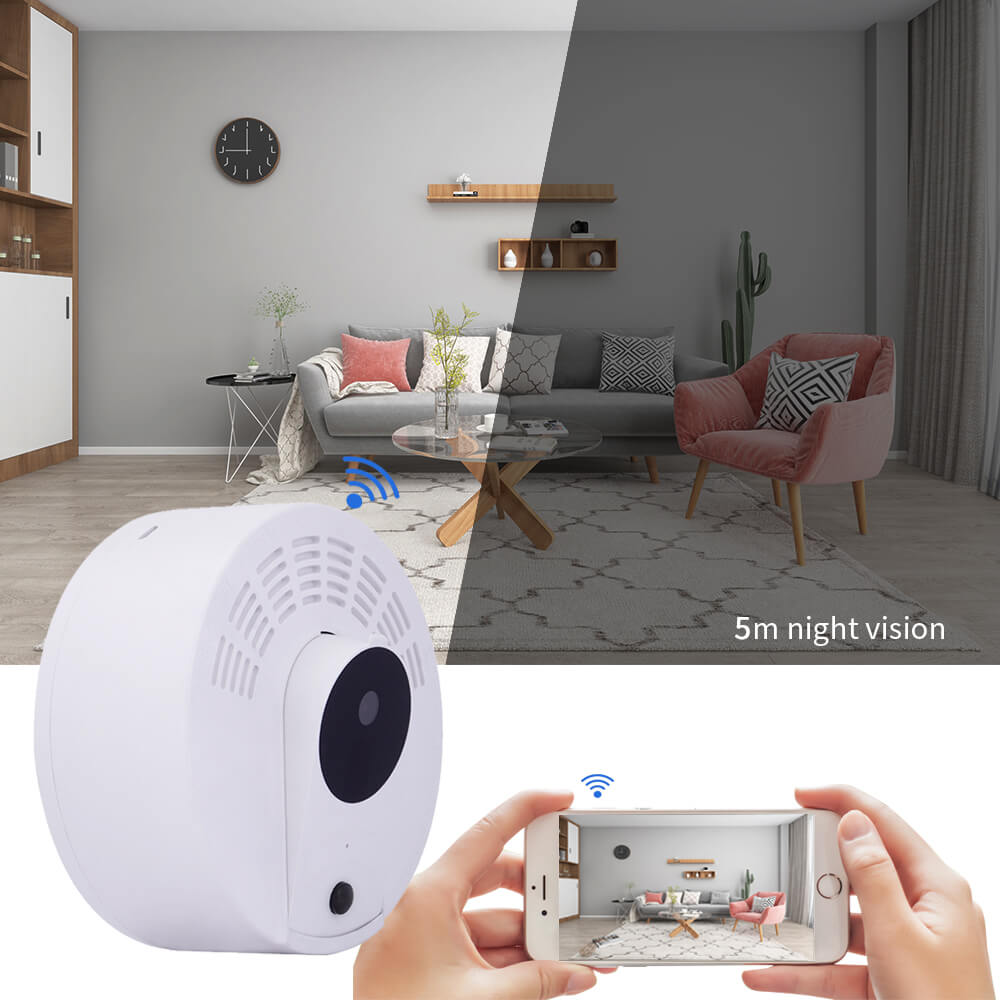
Do Hidden Cameras Need WiFi? WiFi vs. Non-WiFi Solutions
Do Hidden Cameras Need WiFi? A Technical Guide for Professional Surveillance
In the professional surveillance industry, the requirement for WiFi connectivity is one of the most frequent inquiries from B2B procurement managers. The answer depends entirely on the balance between real-time accessibility and operational autonomy. As a leading manufacturer, Aishine provides a deep dive into the technical architectures of WiFi and non-WiFi (DV) hidden cameras to help you source the right hardware for your clients.
WiFi-Enabled Hidden Cameras: The Power of Remote P2P
WiFi-enabled devices are engineered for scenarios where immediate response is mandatory. By connecting to a local 2.4GHz or 5GHz network, these cameras utilize P2P (Peer-to-Peer) technology to stream live footage to mobile apps or VMS platforms.
-
Key Advantage: Real-time push notifications triggered by motion detection (PIR) and cloud/remote storage backup.
-
Best For: Active office monitoring, home security with instant alerts, and remote retail oversight.
-
Technical Consideration: These devices require stable bandwidth and are subject to network latency. For professional deployment, end-to-end encryption is essential to prevent unauthorized access.
Non-WiFi Hidden Cameras: Independence and Data Sovereignty
Non-WiFi hidden cameras, often referred to as DV (Digital Video) Recorders, operate as closed-loop systems. They record footage directly to high-speed Micro SD cards (up to 128GB/256GB) without any external network dependency.
-
Key Advantage: Immunity to WiFi jammers, network outages, and cyber-hacking. They offer the highest level of "air-gapped" security.
-
Best For: Remote locations without internet, high-security facilities (SCIF), and long-term evidence gathering where real-time viewing is not required.
-
Technical Consideration: These cameras rely on loop recording and physical retrieval of the storage media. High-quality H.264 or H.265 compression is vital to maximize storage efficiency.
WiFi vs. Non-WiFi: B2B Scenario Analysis
Choosing the right technology stack is critical for bulk procurement and project-based safety.
| Feature | WiFi-Enabled Cameras | Non-WiFi (SD Card) Cameras |
| Real-time Viewing | Yes (via App/PC) | No (Manual Retrieval) |
| Alerts/Notifications | Instant Push Notifications | None |
| Installation Complexity | Moderate (Network Sync) | Zero (Plug & Play) |
| Cyber Security Risk | Moderate (Requires Encryption) | Zero (Network Independent) |
| Power Consumption | Higher (WiFi Module Active) | Lower (Standby Optimized) |
Technical Sourcing: Why Aishine Provides Both
Aishine's engineering philosophy is built on versatility. We recognize that a global distributor needs a diverse portfolio to meet varying legal and technical standards across different regions.
-
WiFi/DVR Hybrid Modules: Our advanced units can function as WiFi streamers while simultaneously maintaining a redundant local SD backup.
-
Ultra-Low Power Standby: Whether WiFi is active or not, our PIR-triggered sensors ensure maximum battery longevity for covert operations.
-
OEM/ODM Customization: We provide firmware tailoring to switch between WiFi and offline modes based on specific project requirements.
Conclusion: Balancing Discretion and Dependability
The question isn't just "Does it need WiFi?" but "What is the mission objective?". WiFi hidden cameras offer unparalleled convenience and interaction, while non-WiFi models provide robust, unhackable reliability. At Aishine, we ensure that every device—regardless of connectivity—delivers industrial-grade optical clarity and long-term stability.
What are the pros and cons of wireless security cameras?
Can anyone connect to my WiFi camera?